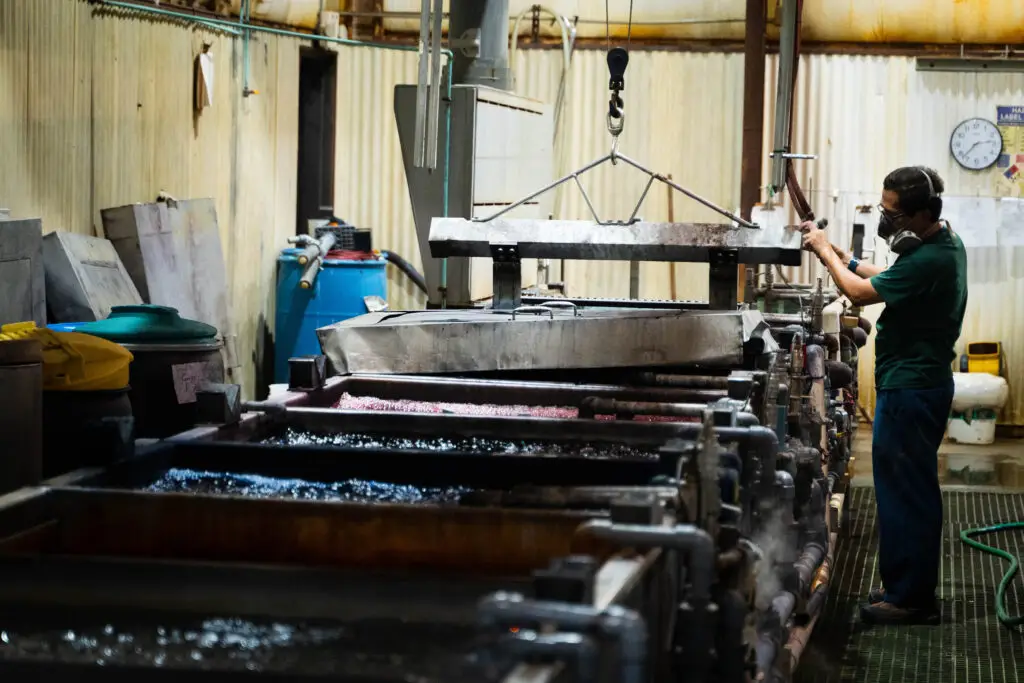
Incoming material inspection
Review the material identity, condition, and project information that should accompany manufacturing input before it enters the defined route.
QUALITY CONTROL
Incoming material, first article, in-process features, dimensional checks, final condition, and packaging are discussed in relation to the individual drawing and project risk.
CONTROL THROUGH THE FLOW
The goal is not to promise an unspecified inspection regime. It is to plan appropriate controls and requested records from the customer’s requirements and the operations that create the part.
Review the material identity, condition, and project information that should accompany manufacturing input before it enters the defined route.
Compare first output with the supplied drawing, identified critical features, and any agreed method of recording or communicating the review.
Focus attention on features influenced by forming, machining, joining, completion work, handling, or an identified process-sensitive step.
Use drawing-defined datums and project requirements to evaluate dimensions and interfaces that affect the component’s assembly function.
Confirm finished part condition, completion work, visible surfaces, project identity, and the state in which the component is ready to pack.
Check count, orientation, protection, labels, and the condition needed for the part to arrive usable at the receiving location.
PROJECT-SPECIFIC QUALITY DOCUMENTS
Use the RFQ to identify material certificates, dimensional reports, first article information, finish documentation, labeling, traceability level, packing detail, or customer-specific forms that must be considered. These are not assumed merely because a website lists a quality section. They are reviewed against the product, its function, and the requirements you provide.
A clear requirement helps connect quality to the process. For example, a finished surface can be protected only when the packing condition is known; a functional interface can be checked only when drawing datums are clear; and a post-form feature must be inspected from a repeatable reference. This is why quality is introduced during the RFQ and engineering review, not only at final release.
Share quality requirements